Bypass Surgery is the procedure in which new vessels are added beyond the blocked arteries to prevent a heart attack. The heart is a muscular organ that pumps blood to the entire body. Just as there are blood vessels that supply all of our organs, there are vessels that supply blood to the heart. If there is a blockage in these vessels, especially during exertion, the heart muscle does not receive enough blood, causing chest pain.
When the coronary arteries become blocked, a heart attack occurs. The goal of all heart specialists is to save lives through early diagnosis and prevent a heart attack. This is because one in three patients who experience a heart attack is at risk of death. In most survivors, heart failure develops due to irreversible damage to the heart muscle.
After coronary angiography, if critical narrowing in the vessels is detected, the arteries should be opened to prevent a heart attack. There is no medication that can open the arteries. If structurally suitable, the vessels are opened with angioplasty. For unsuitable vessels, coronary bypass surgery is required.
The decision for treatment should be made jointly by the cardiologist (the doctor performing the angioplasty) and the heart surgeon. When evaluating your treatment options, it is essential to consult with a heart surgeon. Bypass surgery is the most appropriate treatment due to its ability to prevent heart attacks, eliminate the need for repeated procedures, and provide a high quality of life.
Angioplasty and bypass surgery are two different procedures. In angioplasty, the blocked part of the artery is opened by inflating a small balloon, and a metal stent (a cage) is placed to prevent it from closing again. Since this procedure involves the diseased part of the artery and damages the inner surface of the vessel, blood-thinning medications are given before the procedure, and patients continue taking blood thinners for 6-12 months afterward. In bypass surgery, the blocked section of the artery is not touched. A new vessel is grafted to a further part of the artery, bypassing the blockage. Since the procedure is performed on a healthy part of the artery and does not damage the inner surface, it is a longer-lasting solution.
In most cases, coronary artery disease involves more than one artery (especially in diabetic patients), with blockages in side branches, bifurcation points (where the artery divides), and in multiple arteries (the heart is supplied by three main coronary arteries). In such cases, bypass surgery is superior to stenting. It offers longer survival rates and a lower risk of requiring another angioplasty or heart attack. The idea of "I'll manage with stents for as long as possible and then get a bypass later" is incorrect. Of course, stenting in suitable arteries, especially during the first few hours of a heart attack, is life-saving and long-lasting.
However, placing multiple long stents in several arteries is not durable, as the artery will likely become blocked again in a short period, leading to another heart attack. Additionally, in a future bypass surgery, the lack of a healthy section of the artery can pose a risk to the procedure itself. Scientific studies have shown that a bypass surgery performed on an artery that has never been stented is more successful and longer-lasting than a surgery performed on an artery that has been stented and then blocked again. Therefore, the most durable treatment plan should be made for you from the start.
Bypass surgery should not be a procedure that you undergo repeatedly, so the first surgery should be planned properly and performed by a skilled surgeon. Second and third surgeries are riskier procedures. The hospital where you undergo the surgery should be a fully equipped medical center with all necessary technical and treatment support readily available. Bypass surgery is not just a procedure concerning the heart; therefore, you should undergo detailed tests covering all of your body’s organ systems before the surgery. This way, risks are minimized, and necessary precautions are taken.
The artery to be bypassed during coronary bypass surgery is important. The most commonly used artery is the vein taken from the leg, which is the great saphenous vein. Another artery used is the internal thoracic (mammary) artery, which supplies blood to the chest wall (the ribs), located on both sides of the sternum. The radial artery from the arm is also another option. The chest wall artery is the artery that remains open the longest. The veins taken from the leg have a higher likelihood of becoming blocked in the long term. The radial artery is better than the leg vein but worse than the chest artery.
Bypass surgery can be performed in all patients without opening the sternum, using a minimally invasive approach (minimally invasive bypass surgery).
Minimally invasive bypass surgery is performed through a small incision in the left chest cavity, between the ribs. In this surgery, the veins and arteries taken from the leg and arm are also removed endoscopically with the help of a camera. There will be no incisions on your leg or arm.
- Your doctor should inform you about your condition as if it's the first time you're hearing about it, providing all the details clearly.
- They should share all treatment options with you, both surgical and non-surgical, and their potential outcomes (medication-monitoring-surgery, balloon-stent-bypass).
- Your doctor should discuss the process and risks with you starting from before the surgery.
- A decision should be made in a council composed of cardiologists and heart surgeons after coronary angiography.
- If you have undergone angiography after a heart attack, the timing of the surgery will be planned according to the results of the tests (it may be early, or waiting for a period may be recommended).
- Generally, routine tests to be done before the surgery are required during a one-day hospital stay prior to the operation. These tests are performed to detect any conditions that may pose a risk during surgery and to take precautions (detailed blood tests, echocardiography, carotid artery ultrasound, chest X-ray-CT, pulmonary function test).
- If you are taking blood thinners, you will need to stop them 5-7 days before (you do not need to stop aspirin); your other medications will be adjusted by your doctor.
- The hospital staff will perform the full body shaving (do not do it yourself, as the staff will do it with special tools according to the planned surgery), and your nurse will explain to you how to bathe with a special soap.
- The night before the surgery, if your doctor deems appropriate, a sedative medication will be given to help you sleep well.
- While going to the operating room, despite being awake, you will not remember entering the operating theater due to the effect of an intravenous medication.
- Heart surgeries are performed under general anesthesia. The anesthesia procedure takes about 45-50 minutes before surgery.
- Electrodes are placed on your back to monitor your heart rate throughout the surgery. A small intravenous line is placed in your arm. An arterial cannula is placed in your wrist to continuously monitor your blood pressure during the surgery and intensive care. The procedures up until this point are pain-free and will not be remembered, as they are done under the effect of a sedative injection before entering the operating room.
- General anesthesia is administered with intravenous drugs. Once full anesthesia is achieved, a tube is placed into your trachea, and your breathing is supported by machines.
- A larger cannula is placed in your neck for the administration of medications and fluids during the surgery and intensive care (blood can also be drawn from this line, so you won’t experience pain every time blood is drawn). A urinary catheter is inserted.
- To monitor the heart, especially after valve surgeries, and to evaluate the valve functions, a special cannula is placed in your esophagus for echocardiography during the surgery.
- Your body is positioned for the surgery, and the necessary areas are cleaned with special antiseptic solutions.
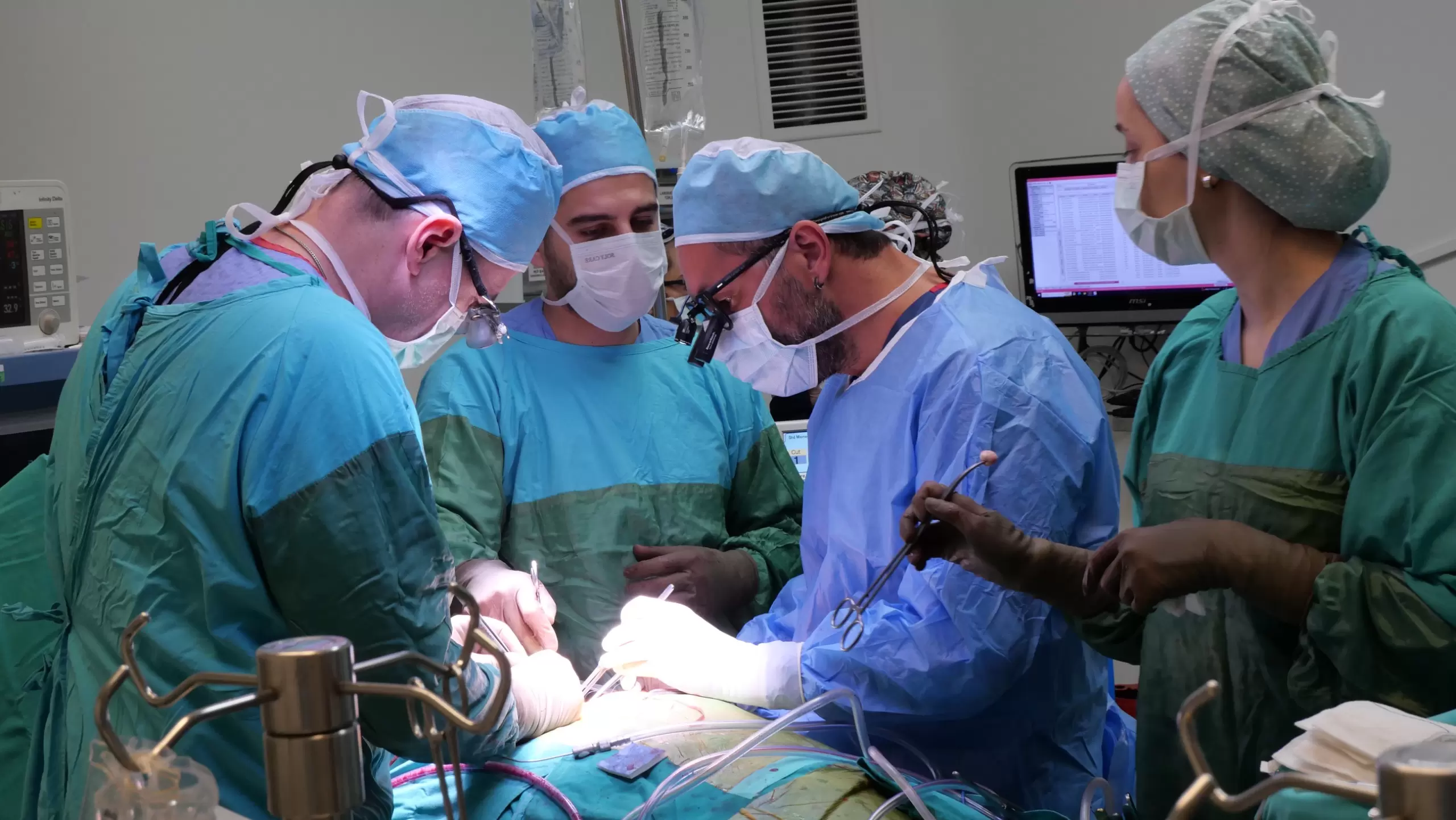
- The surgery has begun... From this point on, your surgeon will be assisted by two other surgeons. One is sterilely dressed, and the other two nurses are ready in the room. The anesthesia doctor and a technician are always at your side. Two perfusionists are in charge of operating the heart-lung machine, which will take over the function of your heart and lungs during the surgery.
- After the surgery, you will be transferred to the intensive care unit (ICU) while still under anesthesia and connected to a ventilator.
- You will not wake up in the operating room. Depending on your overall condition, you will be slowly, safely, and comfortably awakened in the ICU, usually 4-6 hours after surgery (it may take longer).
- You will not experience pain. Pain management medications will be planned by the ICU doctor, starting when the anesthesia is stopped, and dosages will be adjusted as needed.
- The most common complaint in the ICU is thirst. Your fluid balance will be carefully monitored with intravenous fluids. However, since you are just waking up from anesthesia, you will not be allowed to drink water immediately; a little patience is required…
- Typically, after a routine surgery, you will be transferred to a regular room on the ward on the 24th hour (this period may vary depending on your condition).
- When you are moved to your room, you will be able to take care of your personal hygiene and walk around. Bed rest is not necessary; on the contrary, you will need to sit up and perform breathing exercises.
- On the 4th day, you can take a full-body shower.
- During your 5-day hospital stay, you will be monitored with certain blood and radiological tests.
- When it’s time for your discharge, you will be provided with a schedule outlining the times for your medications.
- Do not create a hospital-like environment at home. Wake up at your usual time in the morning and take plenty of walks around the house.
- You can accept visitors, but avoid contact with anyone who has an infection.
- Start with short and slow outdoor walks at first. Gradually increase the distance and pace each day to build your endurance.
- You can engage in sexual activity starting from the first week after surgery.
- One week after your discharge from the hospital, you will have a follow-up appointment at the clinic. During this visit, your surgical areas and medication treatment will be reviewed. After one week of regular walking, you can return to work in the third week.